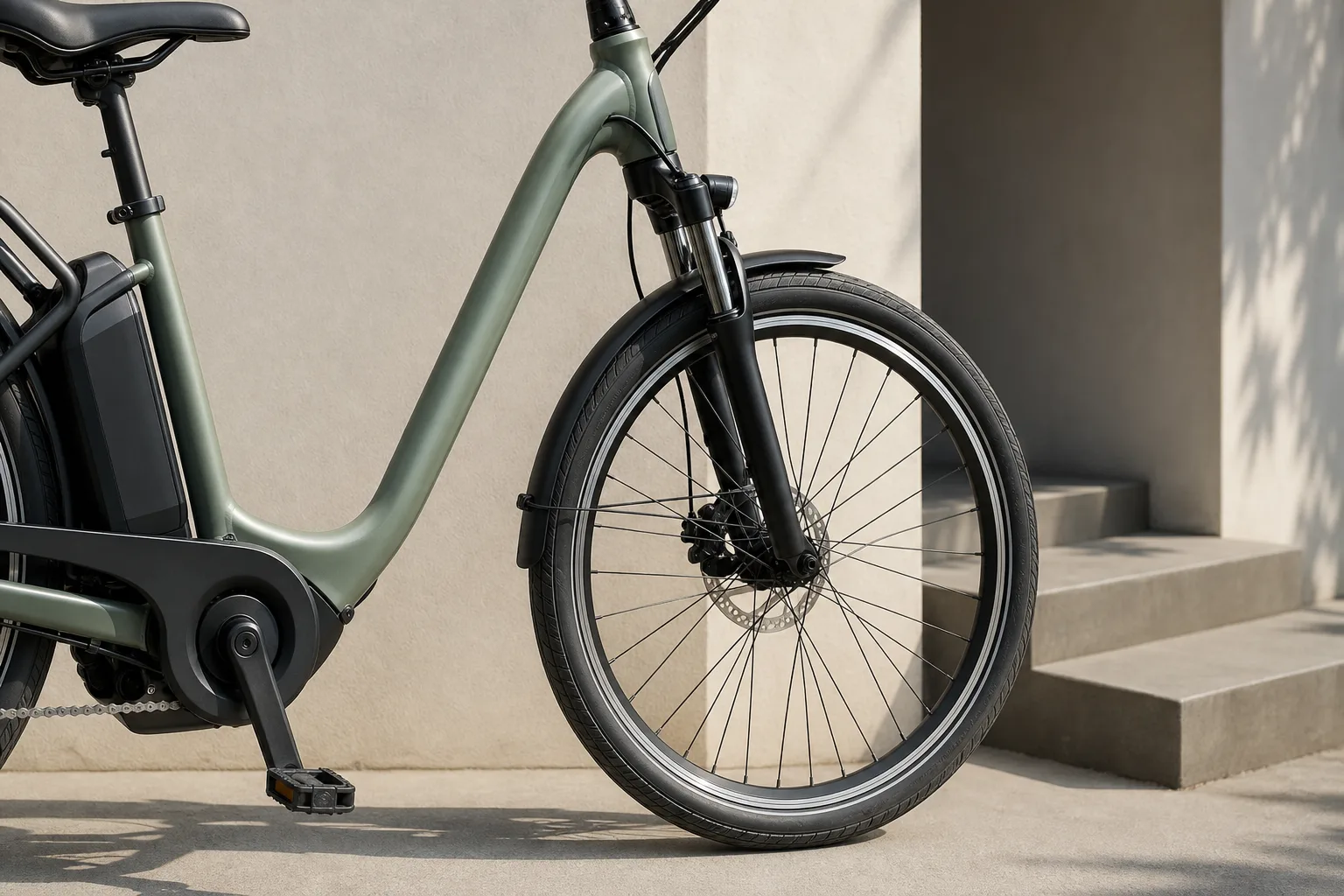
How to measure standover against your inseam, judge saddle height by whether a foot goes flat down, and settle all of it in a shop parking lot in ten minutes.
The number that decides whether a bike gets ridden is rarely the one printed on the spec sheet. It is the distance from the ground to the lowest point you have to swing a leg over, measured against the length of your own leg, and it settles the question before motor type, battery capacity or gear count get a hearing. A bike you have to hop onto is a bike you ride on good days only. A bike you walk into, upright, holding the bars, is one you take out in January when the driveway is slick and your hip is stiff.
Measure your inseam first, then compare it to standover height
Cycling inseam is not pants inseam, and the difference matters by a couple of inches. Stand against a wall in the shoes you ride in, put a hardcover book between your legs and pull it up firmly, then have someone measure from the top edge of the book down to the floor. That is your working number. Standover height is the manufacturer's measure from the ground to the top tube at the point where you would straddle it. If standover is more than an inch or two under your inseam, you have clearance in theory, but theory is not what you deal with at a stop sign with a bag of groceries on the rack.
Step-through, low-step and slanted top tube are three different things
Shops use the terms loosely, and the difference on the showroom floor is large. A true step-through has no top tube at all in front of the saddle: the frame drops from the head tube almost to the bottom bracket, and you walk into it without lifting a foot much above curb height. A low-step keeps a tube but runs it low and nearly level with the chainstays, so you lift a foot maybe eight to twelve inches. A slanted top tube, sometimes sold as a mixte or a sport frame, only tilts the bar down toward the seat post and still asks for a real leg swing. On an electric bike carrying a battery in the down tube, the frame is heavier and less forgiving of a wobble mid-mount, which is why the honest step-through wins so often.
Saddle height, and the foot-flat compromise
Efficient pedaling wants a saddle high enough that your knee is nearly straight at the bottom of the stroke, which on most bodies means only a toe reaches the ground when you stop. Balance and confidence want a flat foot. You cannot have both, so decide which one you are buying, and be honest about it. Many riders who have had a fall, a knee replacement or a run of dizzy spells drop the saddle an inch below the efficient position, accept the slightly bent knee, and get a flat foot down at every light. The motor covers the lost leverage. That trade is available to you precisely because the bike is electric.
Reach, sweep and what stiff shoulders will tolerate
Reach is the distance from saddle to grips, and it decides whether your shoulders carry your weight or your hands do. Stiff shoulders and a sore neck want the grips high and close, which means a swept-back handlebar, an upright stem, or a short adjustable stem you can angle up. Sit on the bike and check where your elbows land: soft bend, dropped and relaxed, not locked out and not pinned to your ribs. If you find yourself craning to see traffic over your shoulder, the bar is too far away. A stem swap is inexpensive compared with buying the wrong frame twice.
The ten-minute parking lot test
Ask to take the bike outside, not just around the sales floor. Mount and dismount six times from both sides, since a bad hip usually has a preference. Ride a slow figure eight in a space about the size of two parking spots, then come to a full stop with both hands on the brakes and put a foot flat down without looking. Roll over the lot's speed bump seated, then ride to the far end and back with your hands off the grips for a second, which tells you whether the bar is holding you up or you are holding it. The Consumer Product Safety Commission oversees the safety requirements bicycles sold here have to meet, but fit is not a regulated dimension, so this is the part only you can check.
Write your inseam on a card and carry it. Then judge every frame you look at against that number rather than against the picture in the catalog, and the shortlist gets short fast.